January 2026

Welcome to my second January 2026 edu-blog post. Busy, busy, busy!
The next (FREE) Chisnell Chatter Live session will take place in cyberspace on Wednesday February 26 2026 at 8:00am-8:30am and will focus on Inclusion and Inspection – embedding adaptive practice. With the focus on the quality of teaching and curriculum, particularly for disadvantaged pupils, pupils with SEND and those known to social care in the Ofsted framework, this is an engaging session for all school leaders. Here are the Zoom joining instructions:
https://us06web.zoom.us/j/89236716121?pwd=IpafqrSd1h0C8wzdXDxiEofsUJaVci.1
Meeting ID: 892 3671 6121
Passcode: 929505
As ever, do get in touch if you would like any support, training or coaching for you or your teams.
Mobile Phones – to ban or not to ban…
Phones off. Phones away. Phones… occasionally spotted in blazers and socks. The updated government guidance on mobile phones has turned a familiar school issue into a live inspection consideration – and it’s one leaders can’t afford to ignore.
The DfE has published Updated Mobile Phone Guidance, here is what It Means for School Inspections 🎓
The Department for Education has strengthened guidance on mobile phone use in schools and Ofsted will now explicitly reflect this in inspections from 1 April onwards.
Here’s what leaders need to know:
🔹 Phone-free by default – The expectation is clear: schools should be mobile phone-free environments by default, with any exceptions well-justified and consistent.
🔹 Inspection focus – Inspectors will actively evaluate mobile phone policies as part of behaviour, attendance and attitudes. They will expect to see:
• A clearly communicated policy to staff, pupils and parents
• Consistent understanding and implementation across the school day
• Evidence of impact on behaviour, learning and wellbeing.
🔹 Policy rationale matters – If a school chooses to allow exceptions, inspectors will want to understand the reasoning and evidence behind that choice — not just the policy itself.
🔹 Context in inspection judgements – Mobile phone policy won’t be assessed in isolation — it will be considered alongside how effectively leaders shape culture and safeguard pupil wellbeing.
What this means for leaders:
➡️ Now is the time to ensure your phone policy is tight, effective, and consistently enacted.
➡️ Clear communication with staff, pupils and parents should underpin your approach.
➡️ Be ready to explain not only what your policy is, but why and how it supports behaviour, learning and wellbeing.
Great policy without great implementation won’t stand up to inspection scrutiny and that’s where leadership makes the difference.
Here is Ofsted’s blog digging deeper into mobile phone use in schools
Adaptive teaching – top tips from the EEF
Here’s a clear, practical blog-post summary for school leaders on the EEF’s recent piece about effective teacher feedback in adaptive teaching (from Adaptive teaching in practice: using feedback to check understanding – EEF blog):
Feedback and Adaptive Teaching: What Leaders Need to Know
In classrooms where learning thrives, feedback isn’t an add-on, it drives the way teaching responds to pupils’ needs in real time. The Education Endowment Foundation’s recent blog highlights how effective feedback underpins adaptive teaching and supports better outcomes for all pupils. The new Ofsted Framework has a tenacious focus on inclusion, as such, effective adaptive teaching is key to engaging our most vulnerable students. Here are 5 key points outlined in the EEF’s blog.
1. Understanding Adaptive Teaching
Adaptive teaching is less about rigid plans and more about what pupils show us they understand. Teachers gather evidence of learning continuously — through techniques like mini-whiteboards, hinge questions, and varied response methods — so they can tailor their next steps in the moment.
2. Checking for Understanding
Effective feedback begins with checking for understanding that is:
- Connected to clear learning goals
- Inclusive of all learners, not just volunteers
- Safe for pupils to reveal partial ideas or mistakes
This evidence becomes the foundation for meaningful feedback.
3. Responding — Adapting to Move Learning Forward
Once teachers know where pupils are, they can adapt:
- Pause and reteach when many haven’t grasped key ideas
- Adjust support for those who are unsure
- Extend learning for those ready to go furtherThese professional decisions ensure that instruction meets learners where they are, rather than where the plan assumed they’d be.
4. Feedback as an Ongoing Cycle
Feedback isn’t a single event at the end of a task — it’s a cycle that:
- Uncovers learning
- Speaks directly to pupil thinking
- Shapes what happens nextThis ongoing cycle builds confidence and keeps learning moving.
5. Leadership Implications
For leaders, strengthening feedback and adaptive teaching means:
- Supporting formative assessment cultures: prioritise techniques that gather rich, immediate evidence from all pupils.
- Investing in professional learning: feedback practice requires nuanced teacher judgement and skill.
- Monitoring practice thoughtfully: walkthroughs, coaching, and reflective dialogue can help teachers fine-tune how they check and respond in the moment.
In short: feedback + adaptive decision-making = teaching that truly meets pupil needs. When teachers get better at reading the room and leaders help them do so; learning becomes both more visible and more equitable.
Poor Proxies for Feedback – Kate Jones
Kate Jones, in a recent blog for Evidence Based Education asks: what really counts as effective feedback? In her recent article, Kate Jones reflects on how well-intentioned classroom practices — including some forms of feedback — can sometimes look effective without actually improving learning. Drawing on the concept of “poor proxies” from research by Rob Coe and colleagues, she challenges leaders to rethink what counts as meaningful feedback in teaching practice.
1. Beware of Poor Proxies for Learning
Some classroom behaviours are often mistaken for evidence of learning or good teaching — and this includes some feedback practices. Examples of such poor proxies include:
- Students being busy or engaged
- Written feedback that looks substantial
- A calm, ordered classroom
- Curriculum content that’s been coveredThese are positive conditions, but they aren’t reliable indicators that learning is progressing.
2. Not All Feedback Really Advances Learning
Jones identifies common feedback practices that can appear effective but often don’t help students improve if they aren’t acted on:
- Extensive written comments — look impressive, but rarely impact learning if students don’t read, understand, or act on them.
- Stamps or stickers — motivating, perhaps, but not informative about next steps.
- Generic praise — boosts confidence but doesn’t tell learners what was effective or what to do next. Precise praise — which highlights specific actions — is far more useful.
- Ticks/flicks — confirm checking, but often don’t communicate why an answer is correct or what to improve.
3. The Real Measure of Feedback
The strongest indicator of effective feedback isn’t the presence of comments or marks — it’s what students actually do with it. As Dylan Wiliam and Siobhan Leahy aptly put it:
“The only thing that matters with feedback is the reaction of the recipient.”
In other words, feedback must prompt change — guiding learners to act, revise, and deepen understanding. That’s when feedback makes a real impact.
4. Leadership Implications
For leaders striving to build feedback cultures that genuinely improve learning:
- Look beyond surface indicators: Don’t equate busy books or lots of written comments with impact.
- Focus on learning behaviours: Emphasise feedback that generates student response, improvement, and metacognitive growth.
- Support professional learning: Develop shared understanding of what quality feedback looks like — and how to recognise whether students act on it.
In short: Effective feedback is about learner action, not teacher output. As leaders, shifting attention from proxy behaviours to actual learning responses will ensure feedback drives improvement, not just appearances.
Read Kate’s full article here.
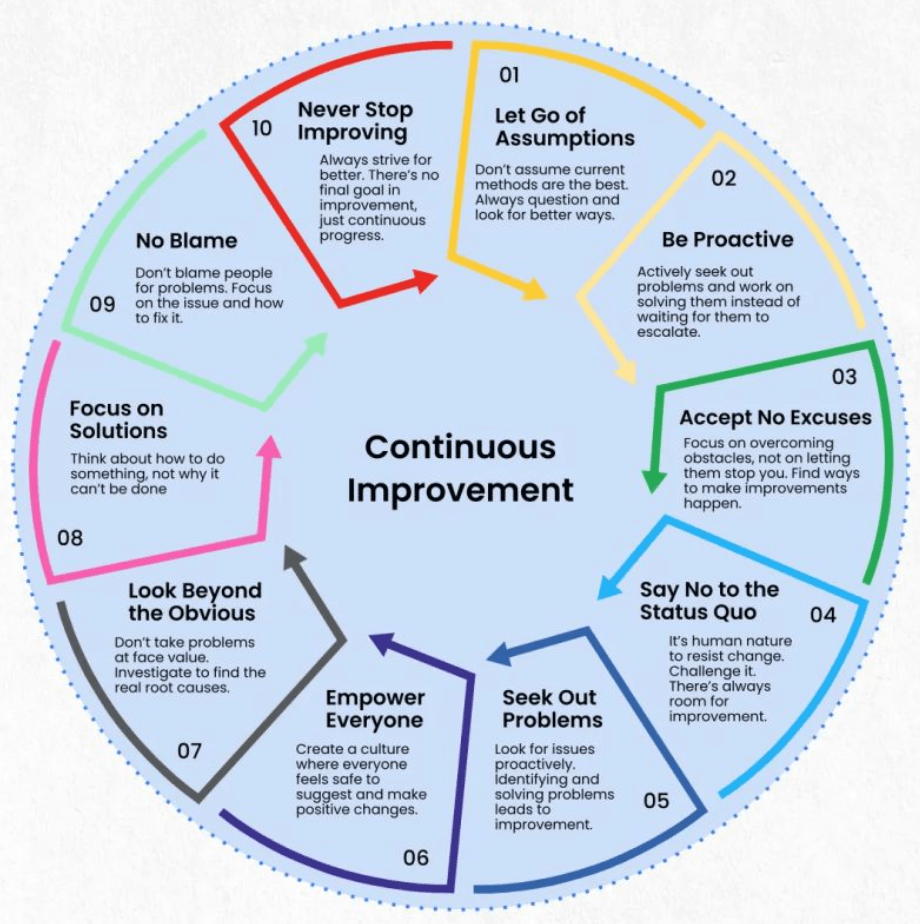
Kaizen – The Japanese Secret That Makes Progress Feel Effortless
In a post on LinkedIn, Eric Parker introduces the Japanese concept of Kaizen. We often assume success comes from big breakthroughs. A bold decision. A dramatic change. A defining moment. In reality, most lasting improvement comes from something far quieter.
Kaizen
A Japanese philosophy that simply means “change for the better.” Not all at once. Not perfectly. But consistently. Originally rooted in Japanese industry and business, Kaizen has a powerful lesson for leadership, learning, and life: small steps, repeated over time, create extraordinary change.
Why Kaizen Works
Kaizen succeeds where grand strategies often fail because it is:
- Simple and sustainable – no overwhelm, no reinvention
- Momentum-building – progress creates motivation
- Mistake-friendly – errors become information, not failure
It removes the pressure to transform overnight and replaces it with permission to improve gradually.
Putting Kaizen into Practice
1. Choose one thing
Start small. One habit. One routine. One behaviour.
Improve it by a fraction. Small change lowers resistance.
2. Learn from mistakes
Something didn’t work? Good.
Ask why, adjust, and carry on. Kaizen treats missteps as data.
3. Celebrate small wins
A quicker process. A clearer explanation. A calmer response.
Progress doesn’t need applause – just recognition.
4. Value feedback
Others see what we can’t.
Listening well accelerates improvement.
5. Stay consistent
Kaizen isn’t about intensity.
It’s about showing up again tomorrow.
6. Involve others
Improvement grows faster in community.
Shared reflection strengthens commitment.
7. Reflect regularly
Pause and look back.
What’s better than it was last month? Last term? Last year?
8. Keep it simple
If it feels complicated, it probably won’t last.
The best changes usually are the quietest.
9. Be patient
Real growth is slow enough to feel invisible – until suddenly it isn’t.
10. Never stop
There is always another small improvement waiting to be made.
A Way of Thinking, Not a Technique
Kaizen isn’t a programme or a productivity hack.
It’s a mindset. Start small. Stay steady. Trust the accumulation of effort. And one day, almost without noticing, you’ll look back and realise:
you didn’t just improve – you transformed.
Eric Partaker’s full post on Kaisen is here.
Chisnell Chatter Live
The first Chisnell Chatter Live school leader briefing took place in November and focussed on attendance top tips. A recording of the session can be found here. Chisnell Chatter Live in December focussed on Pitch Perfect Pupil Premium and a recording of this can be found here. The third session focussed on Talent Pathways, a strategic approach to CPD and talent management in schools.
The next (FREE) Chisnell Chatter Live session will take place in cyberspace on Wednesday February 26 2026 at 8:00am and will focus on Inclusion and Inspection – great ideas for adaptive practice. With the focus on the quality of teaching and curriculum, particularly for disadvantaged pupils, pupils with SEND and those known to social care in the Ofsted framework, this is an engaging session for all school leaders.
Here are the Zoom joining instructions:
https://us06web.zoom.us/j/89236716121?pwd=IpafqrSd1h0C8wzdXDxiEofsUJaVci.1
Meeting ID: 892 3671 6121
Passcode: 929505
And finally…

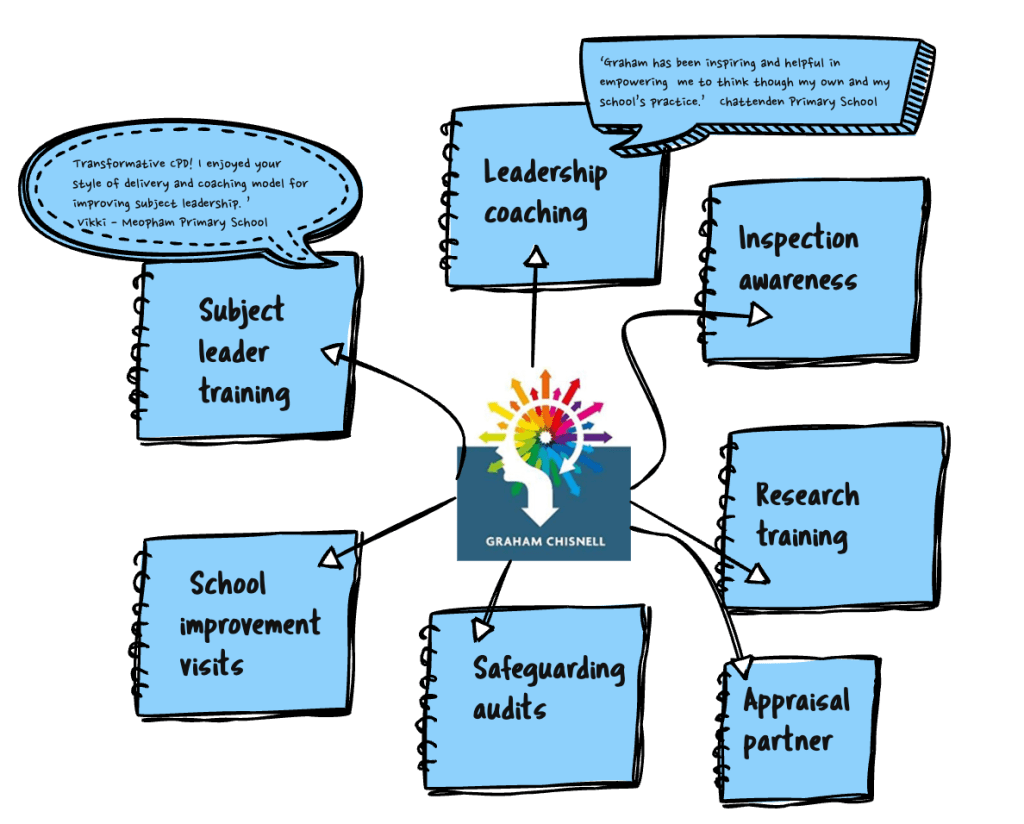
If you would like me to work with you then do get in touch. We can have a coffee and a chat. The graphic below shares some of the ways that school and trust leaders have used me in the past year. As always, happy to engage in bespoke work that suits your needs.
For those who have undertaken my professional training programme for subject leaders and senior leaders in the past, you may be interested in my updated programme that aligns to the new 2025 Ofsted Inspection Framework. This will empower your subject leaders to attune their practice to the inspection framework while strengthening their own professional knowledge and impact on pupil outcomes.
 Irresistible Learning